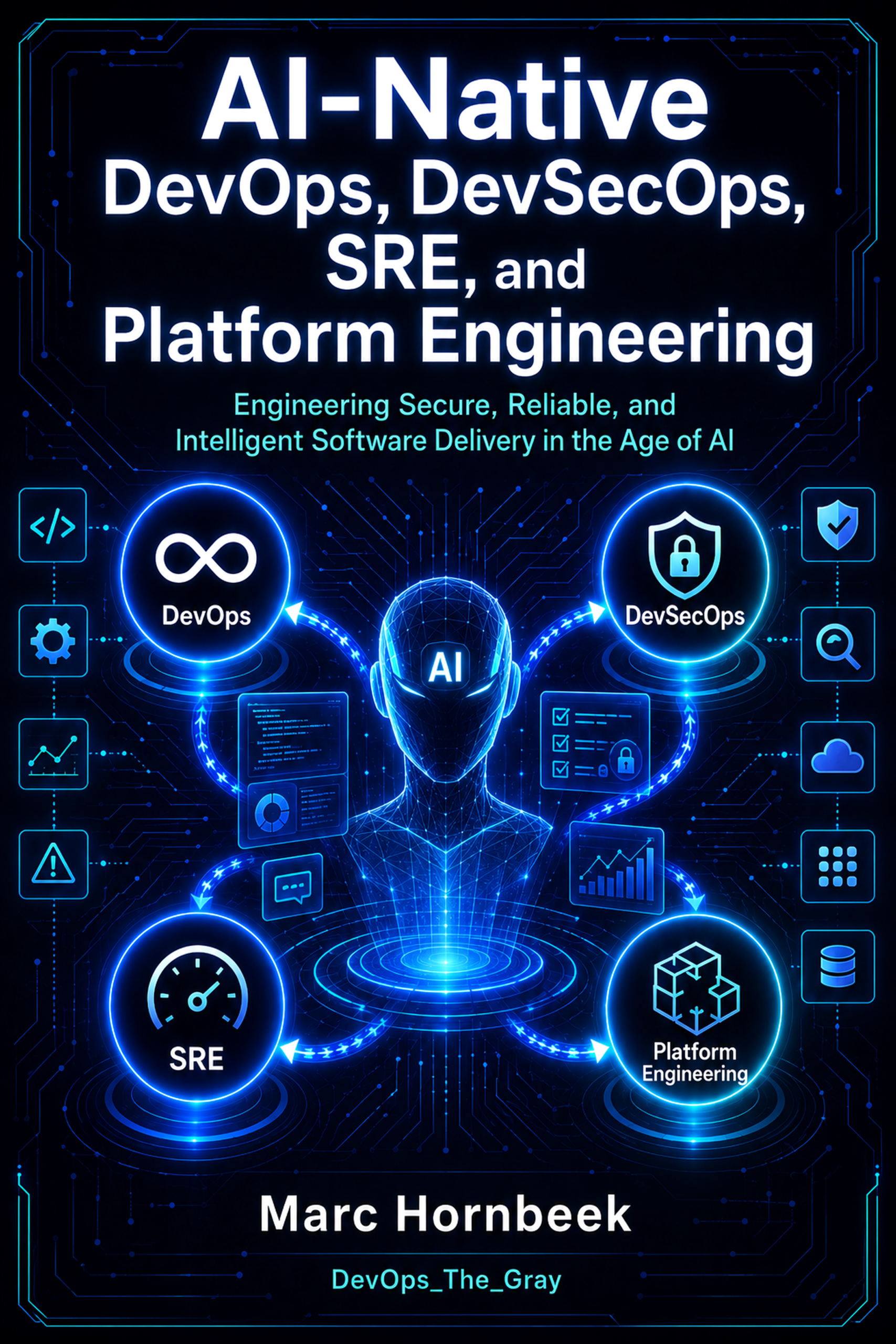
DevOps improves flow and feedback. DevSecOps brings security into the engineering lifecycle. SRE makes reliability measurable and operationally manageable. Platform Engineering reduces friction by giving teams reusable, self-service capabilities and guardrails. AI can assist across all of them, but AI must operate inside a disciplined system of human control, evidence, governance, observability, and trust.
The principle of human-in-control appears throughout the book because it is not optional. Humans define intent. Humans accept risk. Humans approve high-impact changes. Humans are accountable for security, reliability, customer trust, ethics, and business consequences. AI may recommend. AI may summarize. AI may automate bounded work. Responsibility remains with people.
This book also reflects my belief that engineering respect and trust are not soft topics. They are part of the operating architecture. A system that exhausts engineers, hides risk, punishes honest reporting, rewards superficial velocity, or treats security and reliability as late-stage obstacles will not become trustworthy because AI is introduced. Trust is earned through evidence, responsible decisions, observable behavior, and continuous improvement.
I have written this book as a practical guide rather than an academic treatment. It is intended for engineering leaders, DevOps practitioners, DevSecOps professionals, SRE leaders, platform teams, security leaders, consultants, educators, and anyone trying to understand what AI-native software delivery should mean beyond the tool demonstrations. The goal is not to provide slogans. The goal is to help readers make better decisions.
The companion course provides a foundation in the terms, principles, and practices. This book goes further. It is meant to help readers apply those ideas to real operating models, real pipelines, real platforms, real security concerns, real reliability tradeoffs, and real organizations filled with human beings doing difficult work.
Some readers may come to this book looking for AI tools. Tools matter, but they are not the starting point. The starting point is the engineering system. What promise is the system expected to keep? How is that promise validated? How does work flow? Where does security enter? How is reliability measured? What platform capabilities make good practice easier? What evidence supports decisions? Where is human approval required? How does the organization learn?
Those are the questions that matter.